Intercom Alternatives in 2026: Best AI SDR Tools for B2B Teams
Looking for the best Intercom alternatives in 2026? Compare top AI SDR tools and B2B engagement platforms - from HubSpot Conversations to Clara's face-to-face AI - find out which one is built for pipeline, not tickets.
KEY TAKEAWAYS
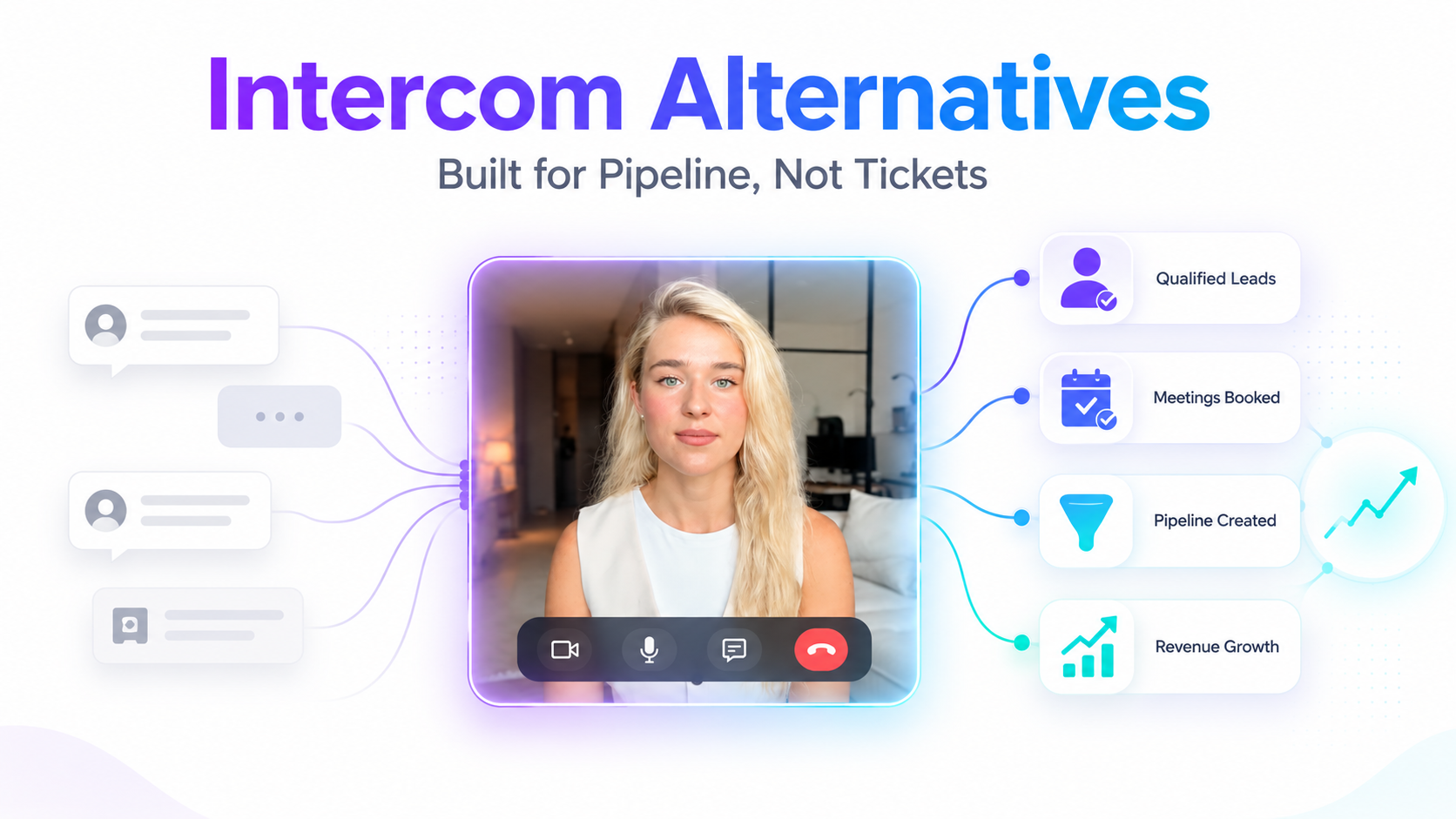
- Intercom was built for customer support messaging - not pipeline generation - and these are fundamentally different jobs requiring different tools
- Most B2B teams searching for Intercom alternatives are trying to solve a pipeline problem, not a support problem
- Text-based chat tools qualify visitors by form field; AI SDRs qualify them through real, adaptive conversation
- Clara is the inbound AI SDR that engages website visitors face-to-face through video - not text chat
- HubSpot Conversations suits HubSpot CRM teams; Drift (now Salesloft) suits existing Salesloft customers; Qualified suits Salesforce enterprise; Clara suits B2B teams focused on converting web traffic into booked meetings
What Is Intercom - and Why Are B2B Teams Looking for Alternatives?
Definition: Intercom is a customer communications platform founded in 2011. It enables businesses to message website visitors, manage inbound support conversations, and deploy AI-powered chat agents (including its AI agent, Fin). Its primary design purpose is customer support, user onboarding, and post-signup retention - not pipeline generation or meeting booking.
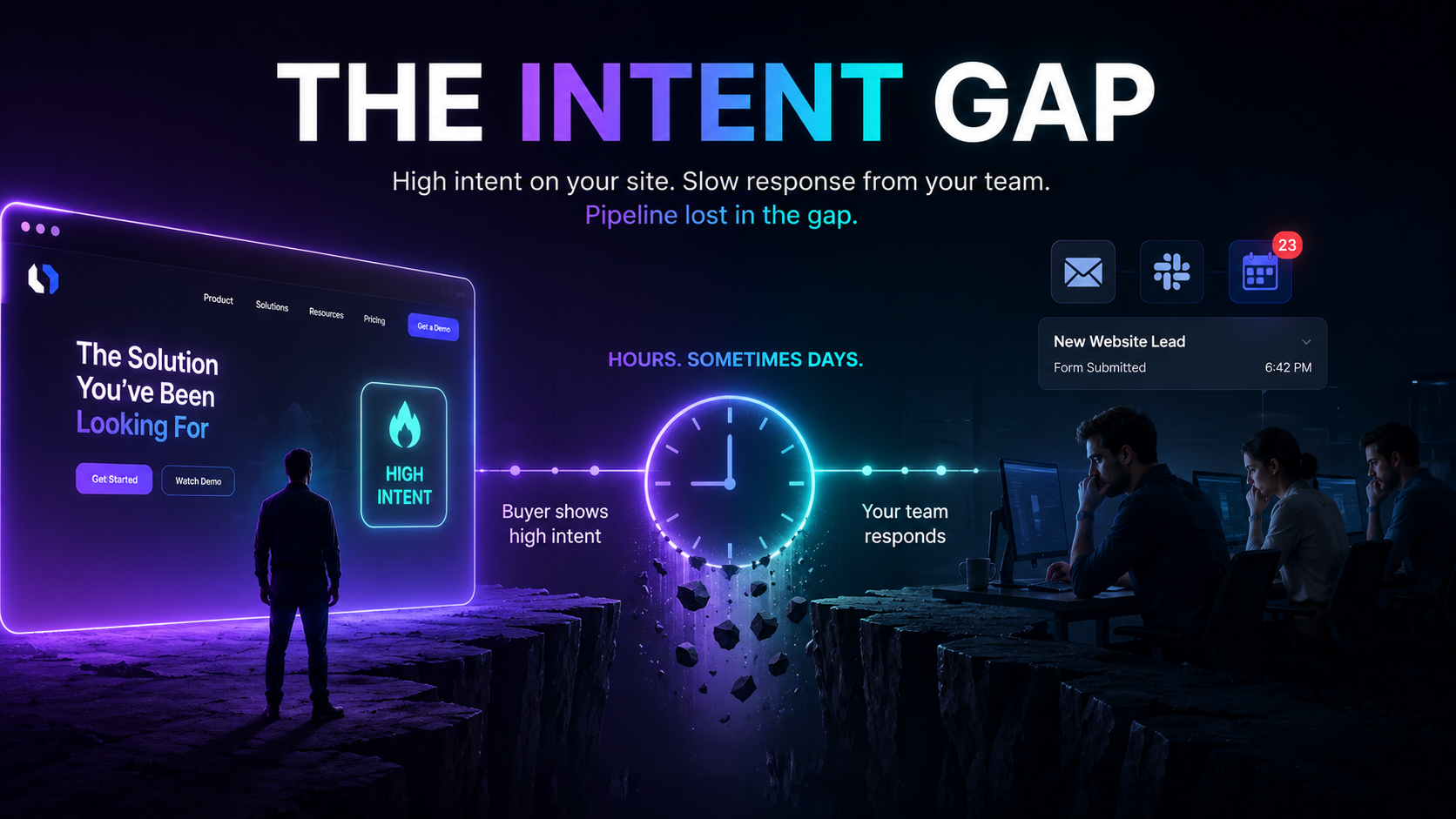
Every month, thousands of qualified B2B buyers land on company websites. They study the pricing page. They scroll through case studies. And then they leave - without talking to anyone, without booking a meeting, without filling a form.
For most companies running Intercom, that exit happens inside a support-routing flow. A visitor asks a question, the bot captures it as a support ticket, and the buyer is gone before anyone qualifies them for pipeline.
That is not a chatbot problem. That is a category problem. Intercom was designed to reduce support ticket volume - not convert high-intent visitors into booked meetings.
A landmark Harvard Business Review study found that companies who engaged inbound leads within one hour were nearly seven times more likely to qualify the lead than teams who waited two hours or more. That window has only narrowed since. In 2026, a qualified buyer who lands on your pricing page and leaves without a conversation is almost certainly not coming back.
B2B teams actively searching for Intercom alternatives in 2026 are typically dealing with one of these problems:
- High-intent visitors are routed into a support queue instead of a pipeline flow
- Text-based chatbots hit a ceiling on qualification - buyers abandon scripted flows or give one-word answers
- No native meeting booking connected to CRM for pipeline-oriented outreach
- Pricing scales in ways that do not map to pipeline output
If any of those resonate, the tools below are the most relevant replacements to evaluate.
What B2B Teams Should Actually Look for in an Intercom Alternative
Not every Intercom alternative solves the same problem. Before comparing tools, get specific on which job you are hiring the tool to do:
Job 1 - Customer support and messaging: You want to reduce support ticket volume, answer FAQs automatically, and improve post-signup onboarding. Intercom handles this well. So do Zendesk and Freshchat. If this is the job, you may not need to switch at all.
Job 2 - Website visitor engagement and pipeline: You want to catch high-intent visitors before they bounce, qualify them through a real conversation, and route them into a meeting. This is where alternative like Clara is specifically designed to operate.
Job 3 - Conversational engagement connected to your existing CRM: You want chat-based engagement that flows natively into HubSpot or Salesforce. HubSpot Conversations and Drift (now part of Salesloft) are built for this workflow.
For B2B revenue teams, the most important evaluation criteria are:
- Real-time qualification - can the tool identify and engage a high-intent visitor before they leave?
- Meeting booking - does it book meetings directly into the calendar, or just collect a form submission?
- CRM integration - does it sync with HubSpot, Salesforce, or your existing pipeline tool?
- Engagement depth - text chat vs. voice vs. face-to-face AI video (engagement quality directly affects qualification quality)
- 24/7 coverage - does it operate when your team is offline?
The Best Intercom Alternatives in 2026
1. Clara - Best for B2B Pipeline Generation from Website Traffic
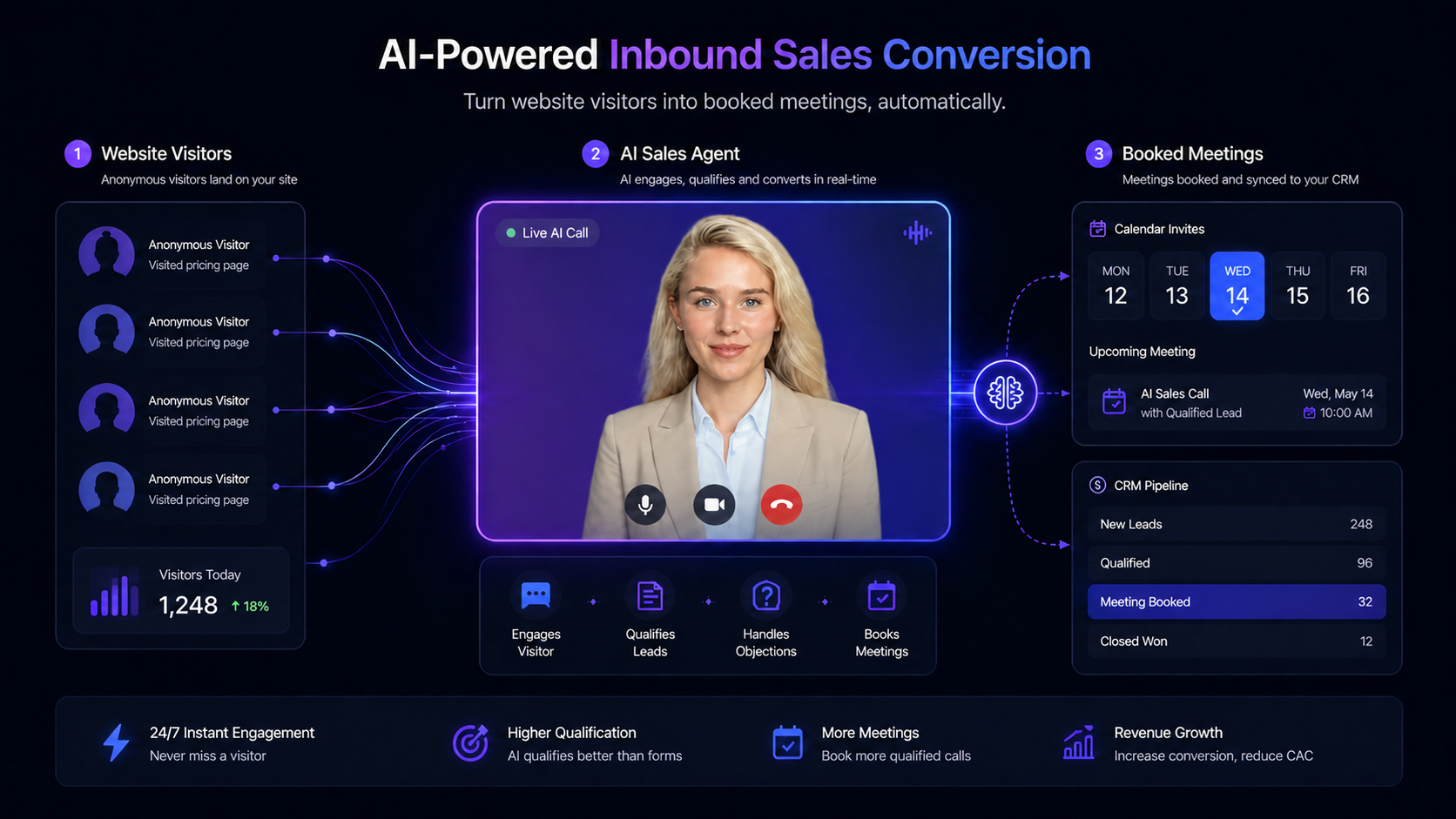
Clara is not a chatbot. It is an AI SDR that engages website visitors face-to-face through real-time video - qualifying them through natural conversation and booking meetings, 24/7, without a human rep in the loop.
Where Intercom initiates a text conversation that may or may not qualify the visitor for pipeline, Clara opens a face-to-face session that mirrors what a great SDR would do: ask the right discovery questions, understand where the buyer is in their journey, share a live demo by screen, navigate to the specific page the buyer asks about, and route them into a meeting before they leave.
What Clara does:
- Engages visitors in real-time, face-to-face AI video conversations
- Qualifies visitors through adaptive, AI-driven discovery questions - not static form fields
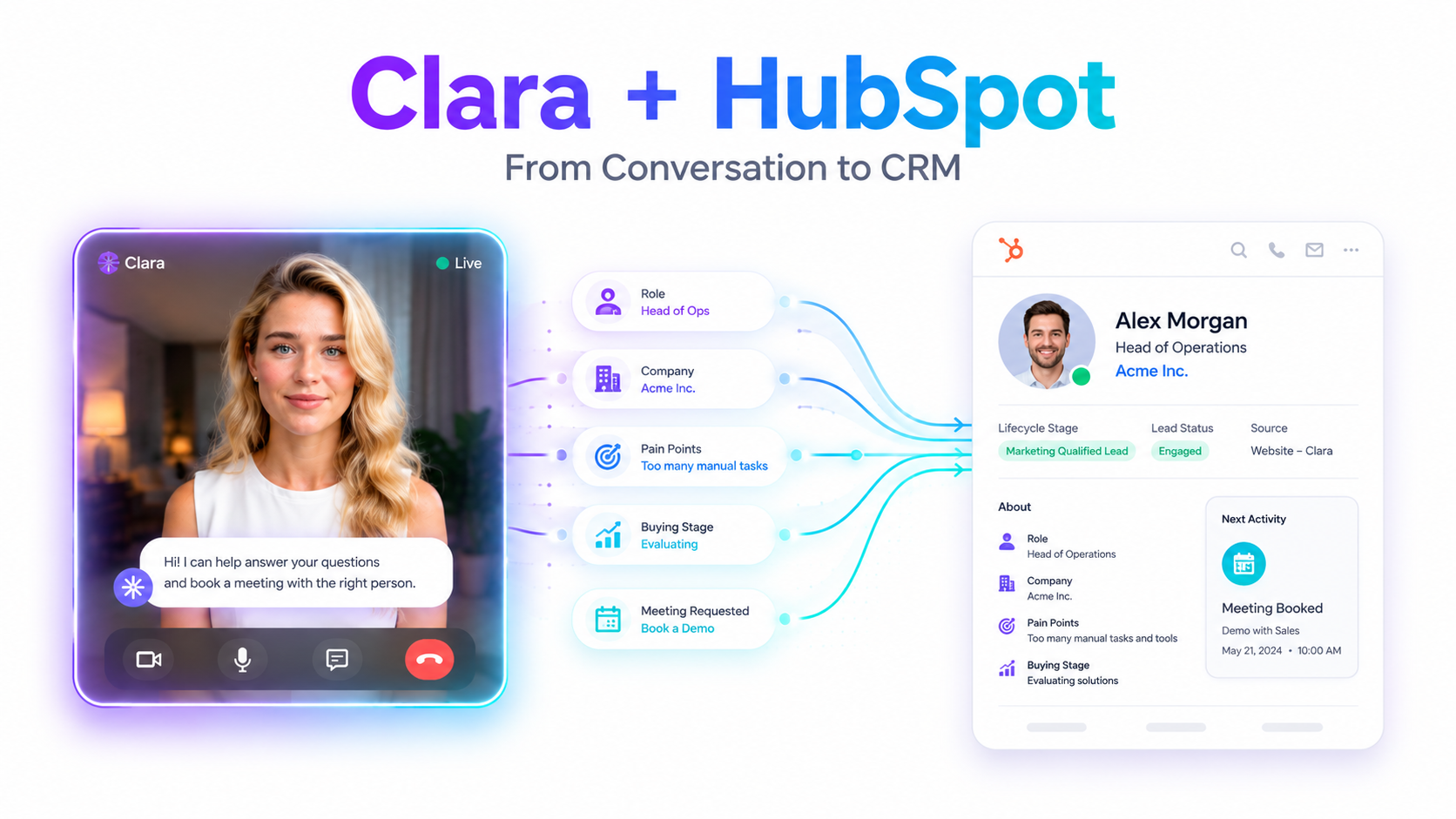
- Books meetings directly into Calendly, HubSpot, or Salesforce
- Shares personalized demos via screen share during the conversation
- Uses browser control to navigate live to any URL the buyer asks about - pricing pages, integration documentation, case studies
- Operates 24/7 across every time zone - no rep required to be online
- Syncs full conversation context and lead data to CRM in real time
- Handles objections with context-aware responses, not scripted redirects
Pricing: Starter tier with no upfront investment. Pay-as-you-Go plan at $180/month. Custom enterprise pricing available.
Setup: Three steps - choose an AI SDR avatar, train on your offering in minutes, deploy on your site. Most teams are live in hours. Compare that to Qualified's 30-60 day implementation timeline.
Security: SOC 2 Type II, GDPR, HIPAA, ISO 27001.
Key differentiator: Face-to-face AI video engagement. Buyers who engage face-to-face qualify at a significantly higher percentage than those completing a text form or chatbot flow. Clara can also share her screen to present live demos and navigate to any URL mid-conversation - a capability no text-based tool can match.
Best for: B2B SaaS companies, enterprise tech teams, and demand gen leaders running paid or organic traffic who need to convert more of it into booked meetings.
2. HubSpot Conversations - Best for Teams Already Inside HubSpot
HubSpot Conversations is the live chat and chatbot layer built natively into HubSpot CRM. It lets teams deploy a chat widget on their site, build automated chatbot flows (called Chatflows), and route conversations directly into HubSpot contacts and deals.
What HubSpot Conversations does:
- Live chat connected to HubSpot CRM contacts in real time
- Chatflow builder for automated qualification sequences
- Meeting booking via HubSpot Meetings links
- Shared team inbox for all incoming conversations
- Automated lead routing based on HubSpot contact properties
Key limitations:
- Text-based only - no voice or video engagement
- Chatflows are form-like in structure - visitors fill fields in a predefined sequence, not a real conversation
- Qualification logic is rules-based, not AI-driven
- Works best for teams already embedded in HubSpot - limited value for Salesforce environments
Pricing: Included in HubSpot CRM plans, starting at $20/month for the Starter tier.
Best for: Teams already using HubSpot for CRM who want a native, low-lift chat layer without adding a third-party vendor.
3. Drift (by Salesloft) - Best for Existing Salesloft Customers
Drift pioneered conversational marketing as a category before being acquired by Salesloft in February 2024, as reported by TechCrunch. Post-acquisition, Drift's technology has been integrated into Salesloft's revenue intelligence platform, making it most relevant for teams already running Salesloft for their SDR workflow.
What Drift does:
- AI-powered chat with visitor identification and routing
- Real-time notifications when target accounts visit the site
- Meeting booking integrated into chat flows
- Intent signals from visitor behavior - page views, time on site, repeat visits
- Account-based targeting for showing specific messages to named accounts
Key limitations:
- Post-acquisition, the roadmap and support model have shifted - some enterprise buyers have noted uncertainty around long-term platform direction in G2 reviews from 2024-2025
- Text-first engagement - no face-to-face video capability
- Highest value for teams already running Salesloft - standalone buyers face higher integration overhead
- Enterprise pricing
Best for: Mid-market and enterprise teams already running Salesloft who want website visitor engagement connected to their existing rep workflow.
4. Qualified - Best for Salesforce-Native Enterprise Teams
Qualified is a pipeline generation platform built specifically for companies running Salesforce. It surfaces real-time buying signals from website visitors - matching them against Salesforce account data - and alerts reps or deploys its AI agent (Piper) to engage them.
What Qualified does:
- Real-time visitor identification against Salesforce account records
- Piper (AI SDR agent) for automated chat-based engagement
- Live chat for rep-assisted conversations when a target account is on site
- Meeting booking integrated with Salesforce
- Video capability available on higher-tier plans
Key limitations:
- Requires Salesforce - not a fit for HubSpot teams or non-CRM environments
- Pricing starts at $42,000/year for plans that include video or face-to-face capabilities
- Designed for enterprise with dedicated RevOps functions - not accessible for growth-stage B2B teams
- Piper (the AI agent) is text-first by default - face-to-face is a premium add-on at higher-tier pricing
- Implementation typically requires 30-60 days with dedicated RevOps support
Best for: Enterprise B2B companies running Salesforce with a dedicated RevOps function and the budget to match.
5. Zendesk - Best for Enterprise Support Teams Needing Chat
Zendesk is primarily an enterprise customer support platform. Its messaging feature (Zendesk Messaging) connects to its broader support ticketing and help desk infrastructure.
What Zendesk does:
- Omnichannel messaging connected to support tickets
- AI-powered answer suggestions for agents
- Self-service help center integration
- Enterprise compliance and security features
- Reporting across all support channels
Key limitations:
- Entirely support-oriented - not designed for pipeline generation or meeting booking
- No SDR-style qualification flow
- Heavy implementation overhead for a B2B pipeline use case
- Enterprise pricing with enterprise implementation timelines
Best for: Large organizations with a dedicated customer support function that need unified messaging, ticketing, and knowledge base in one platform. Not a fit for teams whose primary challenge is website visitor conversion.
Expert Perspective: The Speed-to-Engagement Problem
"Companies that tried to contact potential customers within an hour of receiving a query were nearly seven times as likely to qualify the lead as those that tried to contact the customer even an hour later."
- Harvard Business Review, The Short Life of Online Sales Leads, Oldroyd et al.
That research was published in 2011. The average B2B team today still takes 22 hours to follow up on an inbound lead - a gap that has barely moved in over a decade. The tools in this comparison differ most significantly in how they address (or fail to address) this window. Text chatbots narrow it slightly. Face-to-face AI SDRs like Clara close it entirely.
Which Intercom Alternative Should You Choose?
Choose Clara if: Your primary challenge is that website visitors - particularly high-intent ones on your pricing or demo pages - are leaving without talking to anyone. You want an AI that engages them face-to-face, qualifies them through a real conversation, and books a meeting before they bounce. You need this running 24/7 without adding SDR headcount.
Choose HubSpot Conversations if: You are already running HubSpot as your CRM and want a native chat layer that syncs without adding a new vendor. You accept that the qualification will be form-based rather than conversational.
Choose Drift (by Salesloft) if: You are already a Salesloft customer and want website visitor engagement connected to your existing rep workflow. You are comfortable with the post-acquisition platform direction.
Choose Qualified if: You are an enterprise B2B company running Salesforce, you have a dedicated RevOps function, and you have the budget for a Salesforce-native platform.
Choose Zendesk if: Your primary goal is customer support messaging, not pipeline generation. These are strong platforms for their intended use cases.
Frequently Asked Questions
Is Intercom good for B2B pipeline generation?
Intercom was designed for customer support messaging, user onboarding, and post-signup retention. While it can route conversations to a team member, it was not built for SDR-style pipeline generation. Teams using Intercom to generate pipeline typically find that visitors end up in a support queue rather than a qualified meeting booking.
What is the best Intercom alternative for booking meetings from website traffic?
For pure pipeline generation - qualifying visitors and booking meetings automatically - Clara is the most direct fit. It operates as an AI SDR on your website, engaging visitors face-to-face and routing qualified conversations into booked meetings, 24/7.
How does an AI SDR differ from a chatbot?
A chatbot follows a scripted decision tree - it asks predefined questions and routes responses based on keywords or button selections. An AI SDR like Clara conducts an open-ended conversation, adapts based on what the visitor says, understands context, shares live demos, and handles objections before booking a meeting. The depth of engagement is fundamentally different.
What happened to Drift?
Drift was acquired by Salesloft in February 2024, as reported by TechCrunch and confirmed by both companies. Its technology has been integrated into Salesloft's platform. Drift still exists but is now positioned within the Salesloft revenue ecosystem rather than as a standalone conversational marketing offering.
Can I run Clara alongside Intercom instead of replacing it?
Yes. Most B2B teams that deploy Clara run it alongside their existing support tool rather than replacing it. Clara handles high-intent website visitors for pipeline - qualification, demos, meeting booking. Intercom (or your existing support tool) handles post-signup customers and support conversations. The two use cases are different enough that many teams keep both.
Does Clara work for teams not on Salesforce?
Yes. Clara integrates natively with HubSpot, Salesforce, Calendly, Slack, and Zoho. It is not Salesforce-exclusive - teams running any major CRM can deploy Clara without switching platforms.
How long does Clara take to set up?
Three steps: choose your AI SDR avatar, train on your offering (takes minutes), and deploy on your site. Most teams are live in hours. By comparison, Qualified requires a 30-60 day implementation timeline with dedicated RevOps support.
Is Clara only for enterprise teams?
No. Clara has a starter tier with no upfront investment, making it accessible for growth-stage B2B SaaS teams as well as enterprise. Qualified, by contrast, starts at $42,000/year - designed exclusively for enterprise budgets.
Related Reading
- Why 97% of Visitors Never Talk to Sales (And How to Fix It)
- AI SDR vs Chatbot: What's the Difference?
- What Is an Inbound AI SDR? (And Why It Converts 3x Better Than Outbound)
- How to Convert Website Visitors into Pipeline: A B2B Playbook for 2026
- Clara AI SDR vs. Qualified (Piper): Why the Smarter Teams Are Choosing Clara in 2026