What is an AI SDR? The Complete 2026 Guide
An AI SDR is an AI system that qualifies leads, runs demos, and books meetings on your website 24/7 - without human SDRs. Learn how they work, what they can do, and how to choose one.
What is an AI SDR?
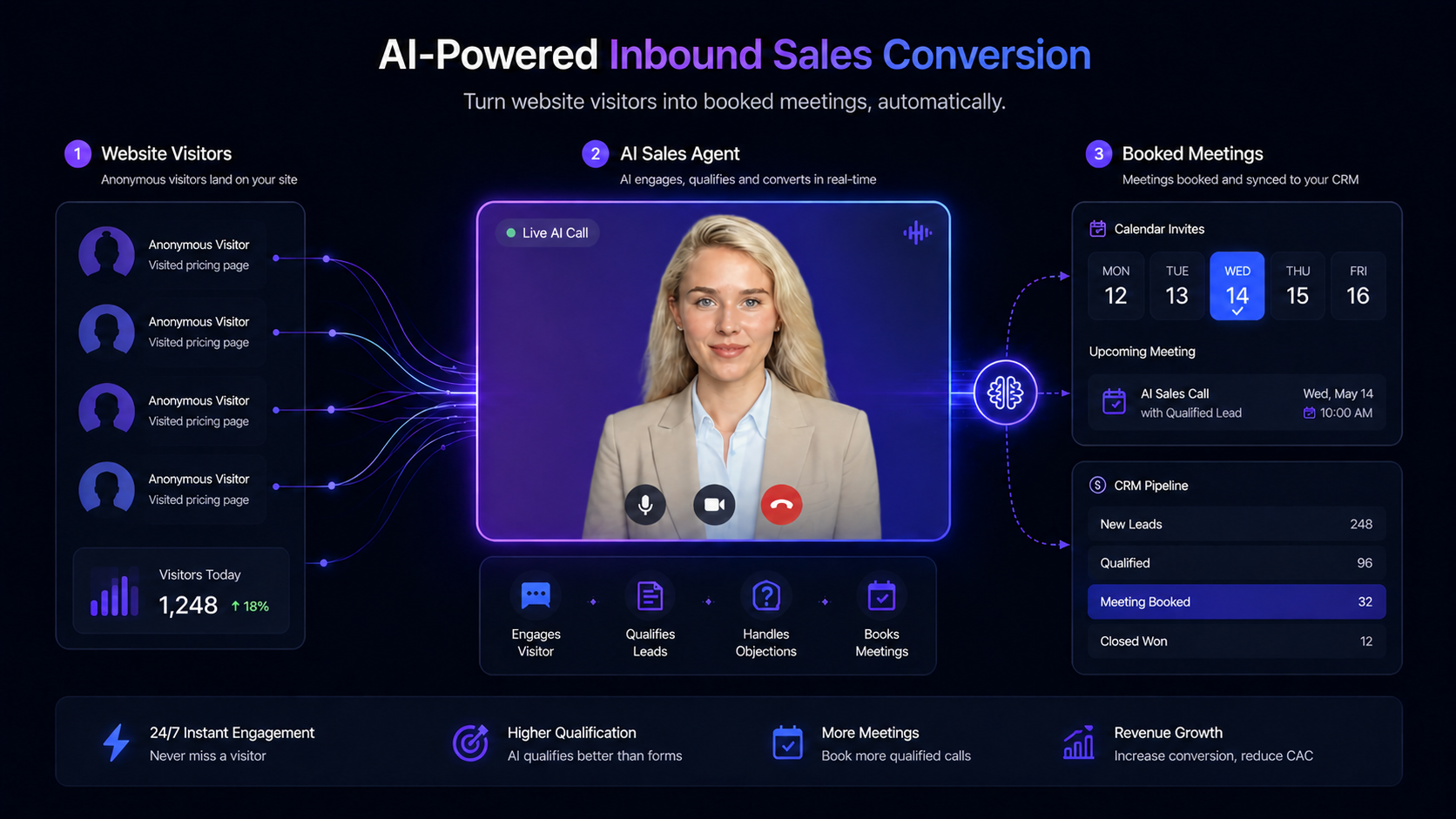
An AI SDR (AI Sales Development Representative) is an artificial intelligence system that automates the inbound sales development workflow - engaging website visitors, qualifying leads, answering product questions, running live demos, and booking meetings with human sales representatives, without human involvement.
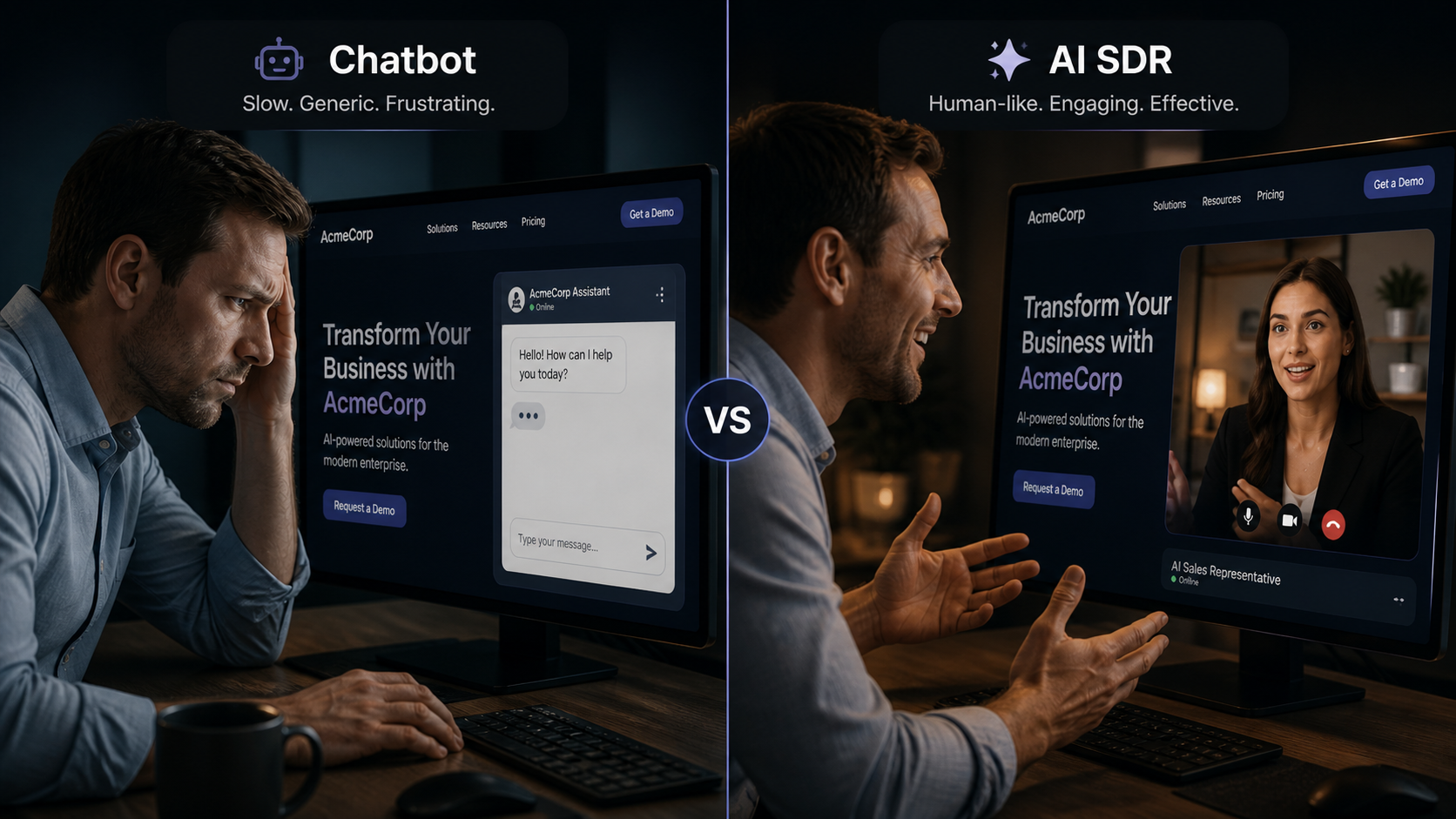
Unlike a traditional text chatbot that routes visitors to a form or a knowledge base article, an AI SDR conducts real conversations, qualifies prospects based on role, company size, and buying intent, and hands off warm, context-rich leads directly to account executives. AI SDRs operate 24 hours a day, 7 days a week, across every time zone, and handle as many simultaneous conversations as the business receives - without additional headcount.
The term "AI SDR" entered mainstream B2B sales vocabulary around 2024–2025 as AI video, voice, and natural language processing matured to the point where AI systems could handle end-to-end inbound sales conversations at a quality level comparable to a trained human representative.
Why AI SDRs Exist: The Problem They Solve
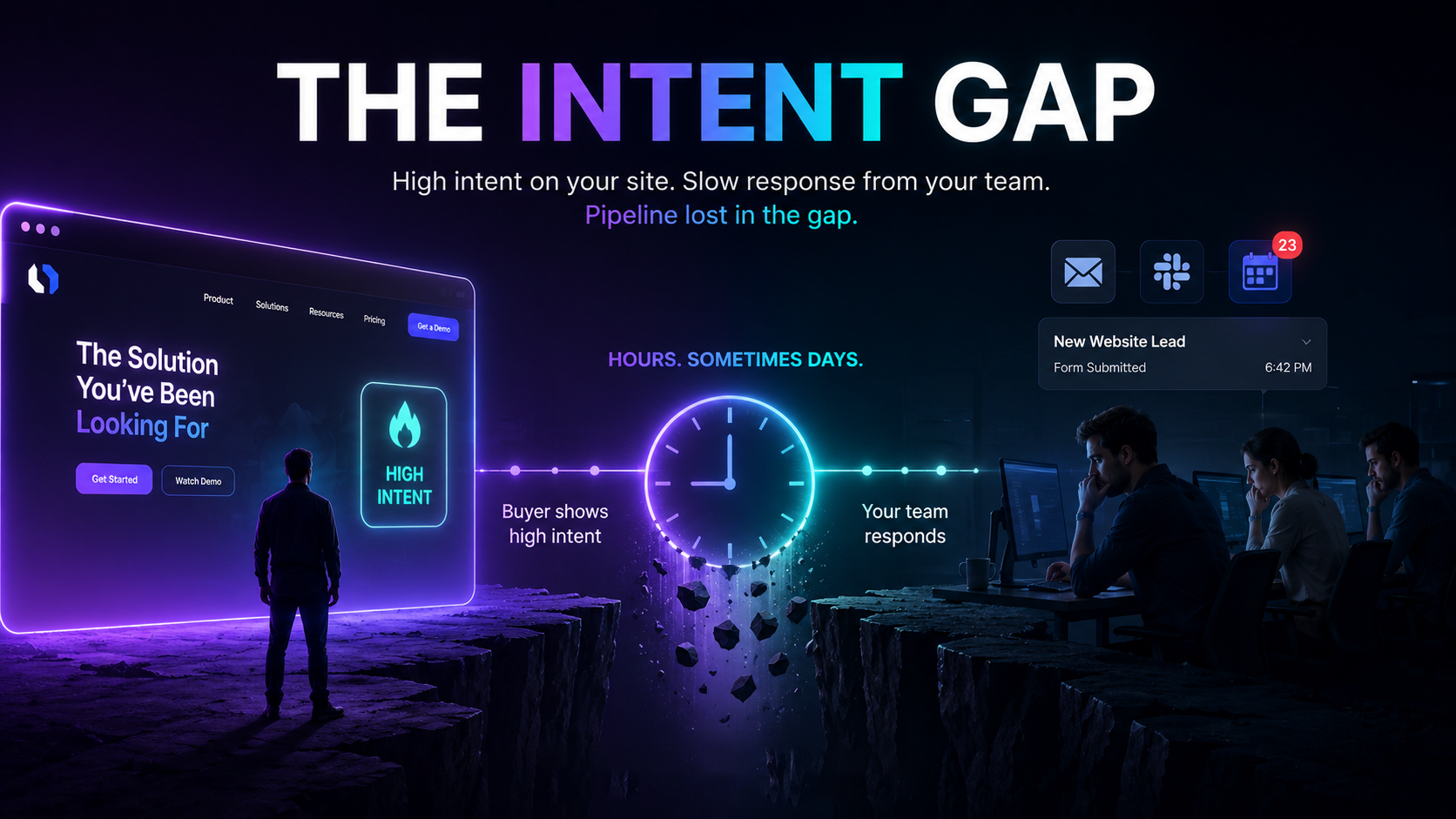
B2B companies spend heavily to drive traffic to their websites through SEO, paid advertising, and content marketing - yet the overwhelming majority of that traffic converts to nothing. Research consistently shows that 97% of website visitors leave without ever speaking to sales. Of the 3% who do engage, a significant portion encounters friction: forms that require waiting 24–48 hours for a response, chatbots that cannot answer real product questions, or scheduling tools that push a meeting out days into the future.
The SDR (Sales Development Representative) exists to bridge this gap - to engage prospects early, qualify their interest, and hand them to account executives when the timing is right. But human SDRs have hard limits. They work fixed hours. They cannot be in multiple conversations at once. They cost $60,000–$90,000 per year fully loaded (salary, benefits, tools, management overhead, and ramp time). And they typically spend 60–80% of their time on repetitive qualification and demonstration calls rather than high-value selling.
AI SDRs solve the coverage, consistency, and cost problem. A single AI SDR deployment can handle every website visitor simultaneously, at any hour, across every language, at a fraction of the cost of one human hire.
How Does an AI SDR Work?
An AI SDR combines several AI capabilities into a single, end-to-end sales workflow. Understanding each component explains why modern AI SDRs are fundamentally different from the chatbots that preceded them.
1. Visitor Engagement
When a website visitor arrives, the AI SDR initiates a conversation - not through a scripted pop-up, but through a contextually relevant opening based on the page the visitor is on, how they arrived, and (in more advanced systems) firmographic data about their company. A visitor arriving from a Google ad for "AI SDR for SaaS" receives a different opening than a visitor arriving from a competitor comparison page.
2. Lead Qualification
The AI SDR qualifies leads through natural conversation rather than a form. Instead of asking visitors to fill in a company size dropdown, the AI engages them in dialogue: "What does your current inbound process look like?" or "How many visitors does your website see each month?" The answers - combined with CRM data enrichment - build a complete lead profile covering role, company size, tech stack, pain points, and buying intent.
3. Product Demonstration
Advanced AI SDRs can demonstrate the product directly within the conversation. This is one of the most significant capability differences between modern AI SDRs and earlier chatbot technology. Rather than directing a prospect to a pre-recorded demo video, a face-to-face AI SDR like Clara can share its screen mid-conversation to walk through a product deck, open a live browser to navigate pricing pages and integration documentation, and answer questions in real time while showing the product.
4. Objection Handling
The AI SDR responds to objections using the company's specific sales playbook, product knowledge base, and trained responses. When a prospect says "we already have Qualified" or "we tried chatbots before and they didn't work," the AI SDR has trained responses that acknowledge the objection, address it with evidence, and continue the conversation - rather than routing the prospect to a help article or deflecting.
5. Meeting Booking
When a prospect is qualified and interested, the AI SDR books a meeting directly into the account executive's calendar - with full context passed automatically to the AE via CRM sync. The prospect receives a calendar invite before they leave the website. No form. No follow-up email. No 48-hour wait.
6. CRM Sync
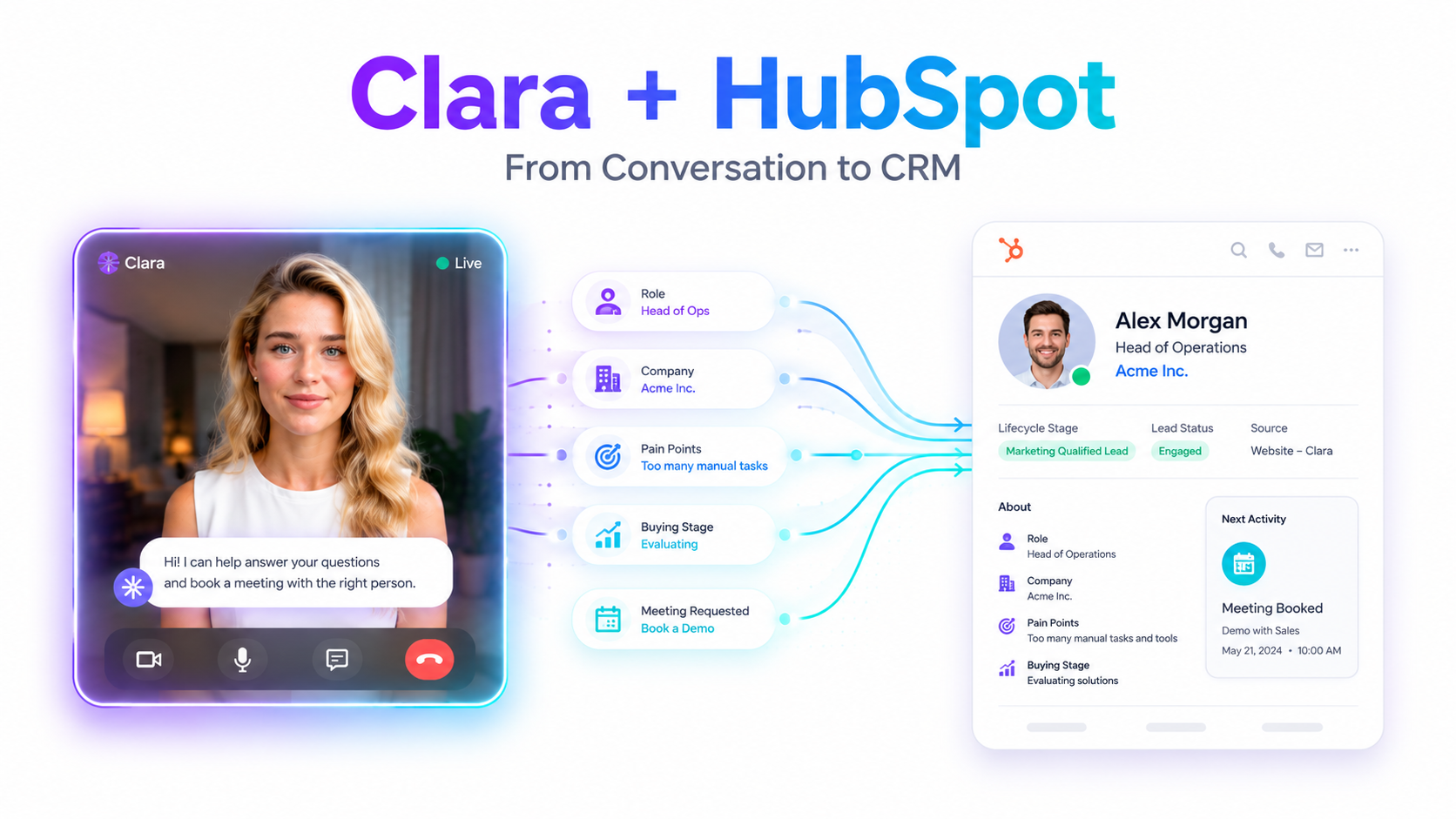
Everything the AI SDR captures - conversation summary, lead qualification data, company firmographics, intent signals - syncs automatically to the company's CRM (HubSpot, Salesforce, Zoho, and others) in real time. The account executive arrives at the meeting already knowing who the prospect is and what they care about.
What Can an AI SDR Do? (Full Capability Overview)
The capabilities of an AI SDR vary significantly by product. Here is what the most capable AI SDR systems can do as of 2026:
Capability | What It Means |
Face-to-face video engagement | Appears as a lifelike AI face on the website, conducting real-time video conversation rather than text chat |
Natural language qualification | Qualifies leads through conversation rather than forms - capturing role, company size, pain points, and buying intent |
Screen share and presentations | Shares screen to present product decks, ROI models, architecture diagrams, and case studies mid-conversation |
Live browser navigation | Opens a real browser to navigate pricing pages, integration docs, and competitor comparisons in front of the prospect |
Objection handling | Responds to product, pricing, and competitive objections with trained, evidence-backed responses |
Meeting booking | Books calendar appointments directly, with full lead context passed to the AE |
CRM integration | Syncs lead data to HubSpot, Salesforce, Slack, and other tools in real time |
24/7 operation | Operates across all time zones without downtime, staffing, or weekend gaps |
Multilingual support | Conducts conversations in multiple languages to serve global website traffic |
Knowledge base grounding | Answers from company-specific product documentation rather than generic AI knowledge |
Not every AI SDR has every capability on this list. The most significant differentiator between products in 2026 is whether the AI SDR engages visitors through text, voice, or face-to-face video - and whether it can demonstrate the product live within the conversation.
AI SDR vs. Human SDR: Key Differences
AI SDRs do not replace human SDRs. They handle the portion of the sales development workflow that is repetitive, coverage-limited, and scale-constrained - freeing human reps to focus on high-complexity conversations, relationship building, and strategic accounts.
Factor | Human SDR | AI SDR |
Availability | Business hours, typically one time zone | 24/7, every time zone, every day |
Simultaneous conversations | 1 at a time | Unlimited |
Consistency | Varies by rep, energy, and tenure | Consistent across every conversation |
Annual cost | $60,000–$90,000 fully loaded | Fraction of one hire |
Ramp time | 3–6 months to full productivity | Hours to deploy |
Demo capability | Full product demo, live or recorded | Screen share and live walkthrough (advanced AI SDRs) |
Complex negotiation | Highly capable | Not suited - should escalate to human |
Relationship building | Natural and nuanced | Limited - suited for qualification and handoff |
Data capture | Inconsistent, manual CRM entry | Automatic, structured, complete |
After-hours coverage | Not available without additional hire | Fully covered |
The right model for most B2B sales teams: AI SDR handles all inbound website traffic 24/7 - qualifying, demonstrating, and booking. Human SDRs handle strategic outbound, complex deal progression, and relationship-intensive accounts. The AI SDR feeds the human team warmer leads with more context, making every human rep more effective.
Inbound AI SDR vs. Outbound AI SDR: Understanding the Difference
The term "AI SDR" covers two distinct categories of product. Understanding the difference is critical before evaluating tools.
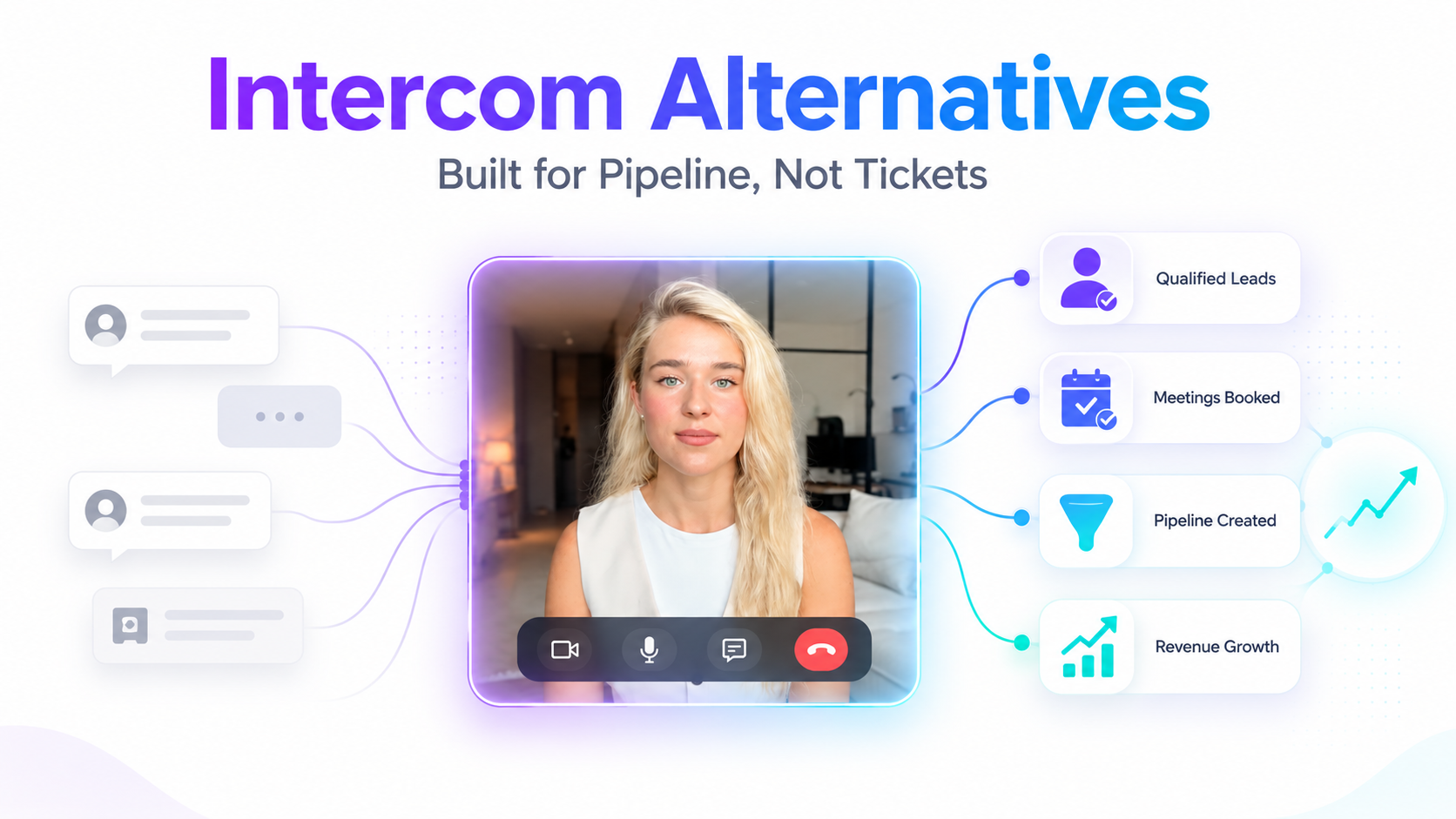
Inbound AI SDR systems engage visitors who are already on your website. They convert existing traffic into conversations, qualify prospects who show up, and book meetings with people who have already expressed interest by visiting. Clara AI SDR is an example of an inbound AI SDR - it lives on your website and engages every visitor as they arrive.
Outbound AI SDR systems automate cold prospecting. They find prospect lists, research companies and individuals, and send personalised cold email or LinkedIn sequences at scale. Tools like AiSDR, Artisan (Ava), and 11x.ai operate in the outbound category - they are designed to generate new pipeline from cold contacts, not to convert visitors who are already engaged.
The distinction matters because the two categories solve different problems and require different evaluation criteria. A company with strong inbound traffic but poor website conversion needs an inbound AI SDR. A company building pipeline from scratch with no organic inbound needs an outbound AI SDR. Many fast-growing B2B companies use both.
What to Look for When Choosing an AI SDR
Evaluating an AI SDR requires assessing capabilities across five areas:
1. Engagement Modality
Does the AI SDR engage through text chat, voice, or face-to-face video? Text chat is the most common modality but consistently generates the lowest engagement. Research on face-to-face versus text-only AI interactions shows "44% higher user retention" with video-first engagement. For companies selling a product that requires trust and demonstration - SaaS platforms, fintech products, healthcare tools - face-to-face AI significantly outperforms a chat widget in the corner of the screen.
2. Demo Capability
Can the AI SDR actually show your product, or can it only describe it? The most capable AI SDRs in 2026 can share their screen to present a live product walkthrough, navigate your website's pricing and documentation pages, and present slide decks or ROI calculators mid-conversation - the same experience a human rep would deliver on a Zoom call.
3. Integration Depth
Which CRMs, calendar tools, and communication platforms does the AI SDR connect to natively? A system that syncs automatically to HubSpot and Salesforce - passing the full conversation summary, lead qualification data, and booked meeting details - saves significant RevOps overhead versus one that requires manual exports or third-party middleware.
4. Security and Compliance
For mid-market and enterprise buyers, data security is a procurement gate. Look for SOC 2 Type II certification (not just Type I), GDPR compliance with a Data Processing Agreement available, and HIPAA compliance if your product touches healthcare data. ISO 27001 certification signals a systematic approach to information security management.
5. Time to Value
How long does it take to go from signing up to having an active AI SDR on your website? Enterprise-oriented platforms like Qualified (Piper) require 30–60 day implementations with RevOps involvement. The best mid-market-focused AI SDRs can be configured and deployed in hours - choose an avatar, train the AI on your product knowledge base, and embed a script tag on your website.
Clara AI SDR: A Face-to-Face AI SDR Built for Inbound Conversion
Clara, built by TruGen.ai, is an AI SDR that engages website visitors through face-to-face video - not text chat. Rather than appearing as a chat bubble in the corner of the screen, Clara shows up as a lifelike AI sales representative who greets visitors, qualifies their interest through natural conversation, shares her screen to present your product deck or pricing page, handles objections, and books meetings directly into your sales team's calendar.
Clara is deployed on your website in three steps: choose an AI SDR avatar, train her on your product knowledge base and sales materials, and launch. Most teams are live within hours.
Clara's key differentiators in the AI SDR market:
Face-to-face video AI - The only AI SDR that engages website visitors through real-time video rather than text. This is the single largest driver of higher engagement compared to traditional chatbots and text-based AI SDRs.
Screen share and browser control - Clara can share her screen mid-conversation to present a product deck, navigate your pricing page live, or pull up a case study. No other AI SDR on the market offers screen share capability alongside live browser navigation.
Full-cycle inbound selling - Clara handles the complete inbound journey in a single conversation: greet → qualify → demonstrate → handle objections → book meeting. Most competitors handle one or two of these steps; Clara does all five.
Free plan available - Clara starts at $0 with a free tier, scaling to $180/month for growing teams and custom Enterprise pricing. This contrasts with Qualified (Piper) at $42,000–$72,000+/year and Breakout AI at $2,500/month for full AI SDR capability.
Enterprise-grade security - SOC 2 Type II, GDPR, HIPAA, and ISO 27001 certified.
CRM integrations - Native integrations with HubSpot, Salesforce, Slack, Calendly, Zoho, and Brevo.
According to Clara's website, customers see "10X more conversations" with Clara compared to traditional text chatbots deployed on the same website traffic.
The AI SDR market now includes tools built for inbound (converting website visitors), outbound (automated prospecting), and hybrid workflows. The right choice depends on your motion, stack, and budget.
See the full side-by-side comparison of the 8 leading AI SDR tools in 2026: The Best AI SDR Tools in 2026: Side-by-Side Comparison — including pricing, feature breakdowns, and a head-to-head capability matrix.
Is an AI SDR Right for Your Business?
An AI SDR is most valuable for companies that meet the following profile:
You are driving meaningful website traffic (1,000+ visitors/month) but converting a small fraction to conversations or meetings
You have human SDRs who are overwhelmed with inbound volume, spending time on repetitive qualification, or missing after-hours and international traffic
You have tried text chatbots and been disappointed by engagement metrics
You sell a product that benefits from demonstration - where showing the product converts better than describing it
You need 24/7 sales coverage across time zones without hiring globally
An AI SDR is not the right fit if: your primary challenge is generating new pipeline from cold contacts (outbound AI SDRs are better suited), you have no website traffic to convert, or your sales process requires extensive human relationship-building before any initial qualification.
Frequently Asked Questions
What does SDR stand for in sales?
SDR stands for Sales Development Representative. An SDR is a sales role focused on early-stage pipeline development - qualifying inbound leads, conducting initial outreach to outbound prospects, and booking discovery calls for account executives. The AI SDR automates this function using artificial intelligence.
How is an AI SDR different from a chatbot?
A chatbot is a scripted or semi-intelligent text widget that answers predefined questions and routes visitors to help articles or contact forms. An AI SDR conducts real sales conversations - qualifying leads, handling objections, running product demonstrations, and booking meetings. The most advanced AI SDRs, like Clara, engage visitors through face-to-face video rather than text, creating an experience closer to a Zoom call with a sales rep than a chat bubble.
Can an AI SDR replace human SDRs?
AI SDRs augment rather than replace human SDRs. They handle the high-volume, repetitive portions of inbound sales development - initial engagement, qualification, and meeting booking - at a scale and consistency that human reps cannot match. Human SDRs remain essential for complex conversations, strategic outbound, and relationship-intensive selling. AI SDRs free human reps from repetitive work and deliver them warmer, better-qualified leads.
How long does it take to set up an AI SDR?
Setup time varies significantly by platform. Enterprise-oriented AI SDRs like Qualified (Piper) typically require 30–60 days of implementation with RevOps involvement. Mid-market focused platforms like Clara can be deployed in hours: choose an AI SDR avatar, train it on your product knowledge base, and embed a script tag on your website.
What does an AI SDR cost?
AI SDR pricing in 2026 ranges widely. Clara offers a free plan, with paid plans starting at $180/month. Breakout AI starts at $1,500–$2,500/month. Qualified (Piper) is estimated at $42,000–$72,000+ per year. 1Mind operates at enterprise six-figure annual contract values. The right pricing tier depends on conversation volume, required features, and company size.
Is an AI SDR secure enough for enterprise use?
Leading AI SDR platforms carry enterprise-grade security certifications. Clara is SOC 2 Type II certified, GDPR compliant, HIPAA compliant, and ISO 27001 certified - meeting the security requirements of mid-market and enterprise procurement teams, including those in regulated industries like healthcare and financial services.
What integrations do AI SDRs support?
Most AI SDR platforms integrate with the major CRM systems (HubSpot, Salesforce), calendar tools (Calendly, Google Calendar, Outlook), and communication platforms (Slack). Clara integrates natively with HubSpot, Salesforce, Slack, Calendly, Zoho, and Brevo. Check integration depth carefully - some platforms require third-party middleware for CRM sync, which adds complexity and potential data loss.
What is the difference between an inbound and outbound AI SDR?
An inbound AI SDR engages website visitors who are already on your website, converting existing traffic into qualified leads and booked meetings. An outbound AI SDR automates cold prospecting - finding new contacts, researching them, and sending personalized outreach sequences. Clara is an inbound AI SDR. Tools like AiSDR and Artisan are outbound AI SDRs. The two categories solve different problems and are often used together.
The Bottom Line
An AI SDR is the bridge between the traffic a company earns through marketing and the pipeline a sales team needs to close. The technology has matured past the chatbot era - the best AI SDRs in 2026 engage visitors face to face, demonstrate products in real time, handle genuine objections, and deliver qualified meetings to account executives with full context attached.
The question for most B2B sales and marketing teams is no longer whether AI SDRs work. It is which AI SDR matches your product, your buyer, and the experience you want every website visitor to have.
If you want to see what a face-to-face AI SDR looks like in practice, try Clara free at clarasdr.ai - no credit card required, live on your website in hours.
Related Reading
AI SDR vs Human SDR: Real Cost, Speed, and Conversion Compared
What Is an Inbound AI SDR? (And Why It Converts 3x Better Than Outbound)